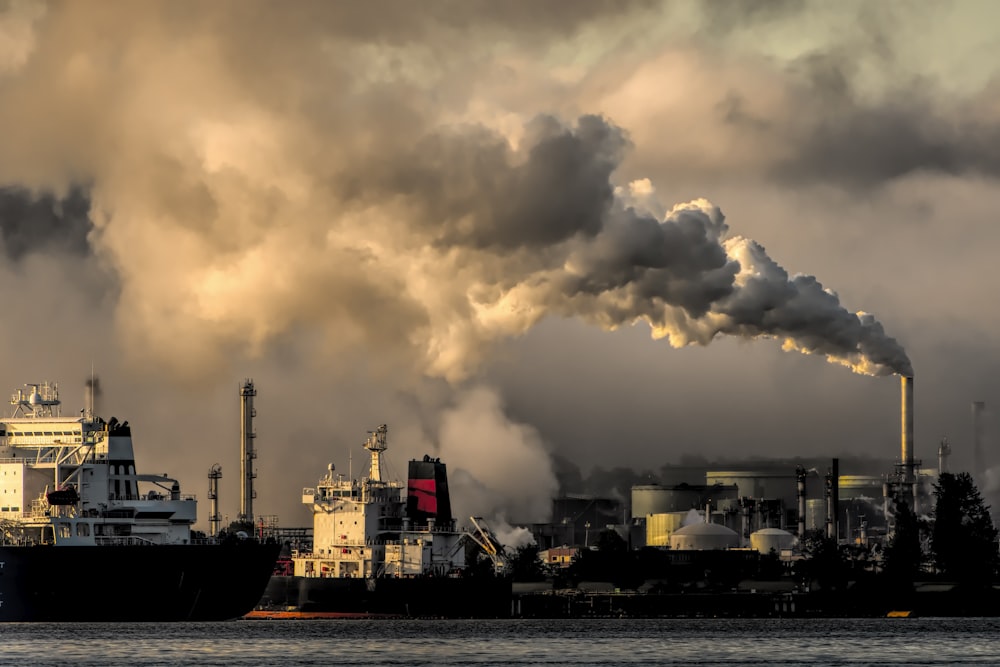
Does CO2 need an ATEX zone?
No. Carbon dioxide is not flammable, so it cannot form an explosive atmosphere and never creates an ATEX zone on its own. A CO2 tank, a CO2 pipeline or a CO2 fire suppression system does not need hazardous area classification or Ex equipment because of the CO2. What CO2 does create is a serious asphyxiation and intoxication hazard, which is controlled with ventilation, CO2 detection and confined-space procedures. If the same area also handles ethanol, grain dust, amines, hydrogen or hydrocarbons, those substances drive the zoning.
Why CO2 cannot be zoned
An explosive atmosphere, as defined in Directive 1999/92/EC and DSEAR, is a mixture of air and a flammable substance (gas, vapor, mist or dust) in which combustion spreads after ignition. IEC 60079-10-1 is written for flammable gas or vapor mixed with air. CO2 is fully oxidized: it does not burn and has no explosive limits (NIOSH lists it as a nonflammable gas). With no flammable substance there is nothing to classify, whatever the CO2 concentration.
This is why CO2 is used the other way round: as an inerting gas to prevent explosions, and as a fire extinguishing agent.
The real hazard: intoxication and asphyxiation
CO2 is about 1.5 times as dense as air (NIOSH gives a relative gas density of 1.53), so it collects in pits, cellars, tanks, trenches and low-lying rooms. The industrial gas associations EIGA and AIGA stress that CO2 is not just an asphyxiant: it acts on the body directly, independent of oxygen depletion.
| CO2 in air | Reference / likely effect |
|---|---|
| 0.5 % (5,000 ppm) | OSHA PEL and NIOSH REL, 8-hour time-weighted average |
| 3 % (30,000 ppm) | NIOSH short-term exposure limit; weakly narcotic, headache, faster breathing (EIGA/AIGA) |
| 4 % (40,000 ppm) | NIOSH IDLH (immediately dangerous to life or health) |
| Above 10 % | Unconsciousness in under a minute, death with continued exposure (EIGA/AIGA) |
Where people ask about "CO2 ATEX zones"
| Application | Does CO2 need a zone? | What may need zoning instead |
|---|---|---|
| Breweries and wineries (fermentation) | No | Grain or malt dust in milling and intake (Zones 20 to 22). Ethanol vapor in distilleries, spirit storage and filling. |
| CO2 storage tanks, beverage and dispense gas | No | Nothing from the CO2; manage cellar and low-level accumulation |
| CO2 fire suppression | No | Only if the protected room is itself a hazardous area (for example a solvent store) |
| Carbon capture and storage (CCS) | No, for the CO2 itself | Hydrogen, fuel gas or hydrocarbons in the process; flammable impurities in the CO2 stream; solvents handled above their flash point |
| CO2 as an inerting gas | No | The flammable substance being inerted, if inerting can fail |
| CO2 (R744) refrigeration | No | Nothing from the refrigerant; R744 is non-flammable (safety class A1 in ISO 817) |
| Biogas | No, for the CO2 fraction | Methane: see Biogas plants |
Breweries, wineries and distilleries
Fermentation releases large volumes of CO2, and fermentation cellars and walk-in coolers are classic places for it to collect. The Brewers Association recommends active ventilation of low areas and relying only on calibrated gas monitors, not on smell or symptoms. None of this is ATEX zoning. Zoning in these plants comes from other substances: combustible dust in grain intake and milling, and ethanol vapor where spirit is distilled, stored and filled. See Distilleries and Grain silos and flour mills.
CO2 fire suppression
Total-flooding CO2 systems (designed to NFPA 12 or ISO 6183, for example) extinguish fire by reducing oxygen, at concentrations that are lethal to people. The safety measures are pre-discharge alarms, time delays, lock-off devices and ventilation after discharge, not Ex equipment. If the protected room is also a hazardous area because of flammable liquids or gases, the system's electrical parts inside that zone (detectors, actuators, alarms) must suit that zone.
Carbon capture plants
The captured CO2 is not flammable, but several other substances in capture plants can be:
- Amine solvents. Monoethanolamine (MEA), a common capture solvent, is a combustible liquid with a flash point of 186 °F (86 °C) according to NIOSH. At ambient temperature it does not form an explosive vapor, but hot sections of the process, releases as a mist, or other solvents need to be assessed.
- Hydrogen and fuel gases. Pre-combustion capture and low-carbon hydrogen plants handle hydrogen and syngas, which are zoned in the normal way (see Hydrogen explosion protection).
- Impurities in the CO2 stream. Depending on the source, captured CO2 can carry flammable impurities such as hydrogen or methane. Their concentration, not the CO2, decides whether any part of the CO2 system needs classifying.
Large CO2 releases from compressors or dense-phase pipelines are a major toxic hazard, handled through consequence modeling, detection and emergency planning rather than area classification.
CO2 as an inerting agent
EN 1127-1:2019 lists reducing the oxygen concentration with an inert gas as a way to prevent explosive atmospheres, and CEN/TR 15281 gives guidance on inerting. CO2 is one of the gases used, alongside nitrogen. The limiting oxygen concentration depends on the fuel and on which inert gas is used, so values for nitrogen cannot be reused for CO2 or the other way round.
Inerting affects zoning in two ways:
- Where inerting is reliable and the oxygen level is monitored, the explosion protection document can take it into account when classifying the inside of the vessel or silo.
- The document must also say what happens if inerting fails: loss of supply, air ingress during opening, or an unmonitored period. The classification has to cover those periods, for example by applying the zone that would exist without inerting whenever the vessel is opened.
Discharging liquefied CO2 produces solid CO2 particles that can carry an electrostatic charge. IEC TS 60079-32-1 includes specific guidance on fire extinguishers and inerting for this reason. Do not use a quick discharge of CO2 from cylinders or extinguishers to "inert" a space that already contains a flammable atmosphere. Every inerted enclosure is also an asphyxiation hazard for anyone who enters.
Common mistakes
- Marking CO2 stores or fermentation rooms as Ex zones and buying Ex equipment, while the actual hazard (CO2 accumulation) has no detection.
- Using oxygen monitors as the only protection where CO2 can build up.
- Placing CO2 detectors at head height or ceiling level; CO2 collects low.
- Assuming a site with CO2 needs no zoning at all, and missing the grain dust, ethanol, solvent or hydrogen that is also present.
- Treating an inerted vessel as permanently non-hazardous without considering inerting failure.
What else applies
- Workplace exposure limits for CO2 (OSHA and NIOSH in the US; national limits elsewhere).
- Confined space rules for tanks, pits and cellars where CO2 can collect.
- Fixed CO2 detection at low level with alarms, and ventilation interlocks where appropriate.
- Hazardous area classification for any flammable substance in the same area: see Does it need ATEX zoning?
This page describes general principles. The assessment for a specific site belongs in its risk assessment and, where flammable substances are present, its explosion protection document.
Frequently asked questions
Does CO2 need an ATEX zone?
No. Carbon dioxide is not flammable and cannot form an explosive atmosphere, so it never creates an ATEX zone or requires Ex equipment on its own. Zoning is needed only if other flammable substances are present in the same area.
Is CO2 explosive?
No. CO2 does not burn and has no explosive limits. It is used as an inerting gas and fire extinguishing agent. The hazard from CO2 is intoxication and asphyxiation, especially where it collects at low level.
Can an oxygen monitor detect a CO2 hazard?
Not reliably. EIGA and AIGA point out that a drop from 21 % to 19 % oxygen corresponds to about 9.5 % CO2, which is very dangerous. Where CO2 can accumulate, it should be measured directly.
Do carbon capture plants need hazardous area classification?
Parts of them may. The captured CO2 is not flammable, but hydrogen, fuel gas, flammable impurities in the CO2 stream, and solvents handled above their flash point can require zones.
Sources
- NIOSH Pocket Guide to Chemical Hazards: Carbon dioxide
- AIGA Safety Bulletin 13/18 (adopting EIGA): Carbon dioxide physiological hazards, not just an asphyxiant
- Brewers Association: CO2 hazards
- NIOSH Pocket Guide to Chemical Hazards: Ethanolamine
- IEC: IEC 60079-10-1:2020 Classification of areas - Explosive gas atmospheres
- IChemE Hazards 25: IEC TS 60079-32-1, the new standard on avoidance of electrostatic hazards
- legislation.gov.uk: DSEAR 2002, regulation 7