September 2026
Shell Monaca CSB Report, Vapes in Coal Mines, and New Mining and Assembly Standards
CSB: Backflow Into a Lit Furnace Caused the Shell Monaca Explosion
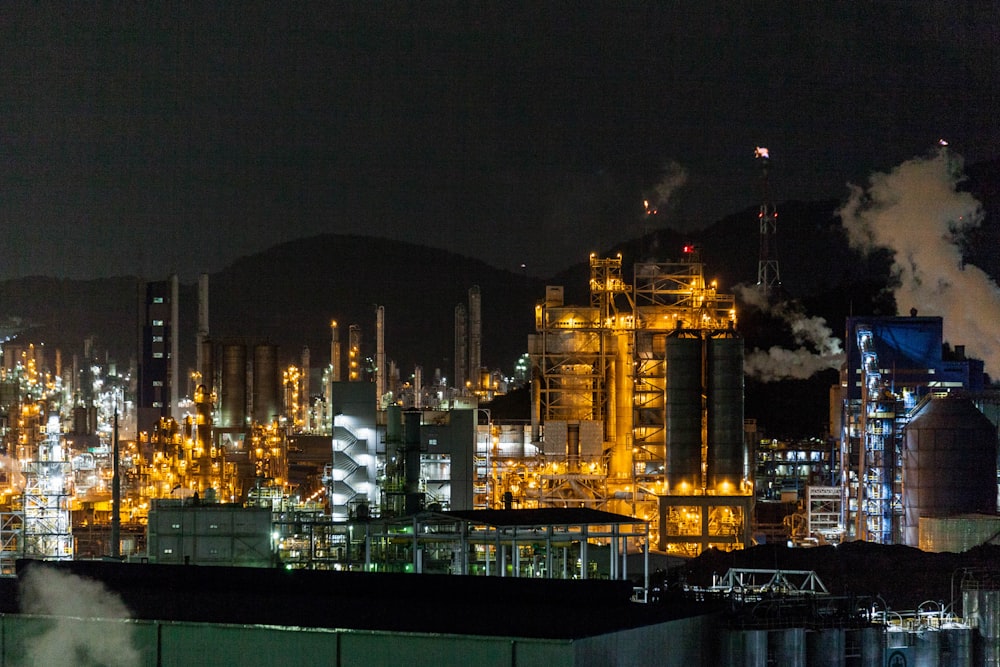
On September 16 the US Chemical Safety Board released its final report on the June 4, 2025 explosion at the Shell Polymers Monaca ethane cracker in Pennsylvania. Flammable cracked gas flowed back from the downstream quench tower into the firebox of Furnace 5, where it reached lit pilots and ignited about six minutes later. The explosion ruptured the firebox wall and was followed by a fire. Fifteen employees were evacuated, and no one was killed or seriously injured. Shell estimated property damage at about $95 million, and an estimated 5,100 pounds of ethylene and combustion products were released.
According to the CSB, a process control engineer who had never done the task before opened both motor-operated valves that isolated the furnace at the same time. Shell relied on 11 administrative controls to prevent backflow. The furnace licensor had provided engineered controls that could prevent it, but they were not configured for the step of removing double isolation. The control screen showed three nearly identical valves whose tags differed mainly in the last digit. The CSB recommended engineered controls to prevent backflow in all modes of operation.
Fired heaters are permanent ignition sources inside process units, and area classification does not protect against flammable gas routed into a firebox. That has to be prevented by the process design and its safeguards. The case also shows how start-up and shutdown steps can defeat protections designed around normal operation (see explosion fundamentals).
Source: U.S. Chemical Safety Board, Sep 16 2026
Queensland Regulator Warns Over Vapes in Underground Coal Mines
Resources Safety & Health Queensland (RSHQ) issued a safety alert after six reports of contraband in mines over five months, including vapes, mobile phones, watches and smoking materials. Two of the alleged incidents involved vapes being used underground. RSHQ had never received a report of a vape in a mine before this year, and had had no reports of contraband in underground coal mines since 2012.
Testing by RSHQ's Safety in Mines Testing and Research Station (Simtars) found that vape heating elements can exceed 250 °C in use. It also found the devices can generate more than 100 times the energy needed to ignite gas in an underground coal mine. The regulator's message: no vapes, no lighters, no contraband underground.
Equipment taken into a gassy underground coal mine is Group I and certified to EPL Ma or Mb. A personal device with a lithium cell and a heating element has no such protection, and methane and coal dust together make it a credible ignition source (see gas groups). The same logic applies to personal electronics in any classified area above ground.
Source: ABC News, Sep 10 2026
Standards: ISO/IEC 80079-38 Edition 2 and IEC 60079-46 at FDIS
ISO/IEC 80079-38:2026, the second edition of the standard for Group I Ex equipment and assemblies forming mining machinery, was published on September 25. It replaces the 2016 first edition as a technical revision. It covers construction, testing and marking for equipment at EPL Ma and Mb. The IEC refers readers to the foreword for the list of technical changes.
Separately, IEC 60079-46 (equipment assemblies) went to its final draft (FDIS) vote, which runs from September 18 to October 30. Its forecast publication date is January 8, 2027, and it will replace the 2017 Technical Specification with an International Standard. It covers assemblies built from individually certified items and addresses new ignition hazards that the assembly creates beyond those individual certificates. It excludes pressurized or ventilated rooms (IEC 60079-13), analyzer houses (IEC TR 60079-16), installation on site, and Group I.
For skid builders and package vendors, 60079-46 is the document that will define how an assembly of certified parts is assessed as a whole (see Ex standards and certification).
Source: IEC Webstore, Sep 25 2026; IEC Webstore, Sep 18 2026
Yenkin-Majestic Pleads Guilty Over 2021 Resin Plant Explosion
Yenkin Majestic Paint Corporation pleaded guilty in federal court in the Southern District of Ohio to a charge of negligent endangerment. The charge relates to the April 8, 2021 explosion at its Columbus resin plant, which killed one employee and injured several others. According to the Justice Department, a new manway fitted to a resin kettle in December 2020 was never pressure tested and leaked from the start. The company kept using it with a thicker gasket that it believed was PTFE but was actually silicone.
On the night of the explosion, the kettle agitator had stopped, likely because of electrical work, and restarting it caused the contents to vaporize. Hot resin and flammable solvent vapor escaped through the manway. Flammable gas detectors registered rising concentrations but were not configured to sound an audible alarm. The vapor found an ignition source at 12:04 a.m.
Gas detection only reduces risk if it leads to action. Where detection is part of the basis of safety, for example to raise an alarm, trip non-Ex equipment or start ventilation, its setpoints and alarm outputs belong in the same inspection and change-control regime as the Ex equipment itself (see installation and inspection).
Source: U.S. Department of Justice, Sep 4 2026
Out-of-Service Gasoline Tank Explodes in Duluth
On September 14 a mostly empty 17,000-gallon gasoline tank exploded at a Superior Fuel transfer facility in Duluth, Minnesota, while two workers were removing the last of the fuel. One worker was injured and later released from hospital. The tank had already been taken out of service and disconnected ahead of a move to another site.
According to the company, residual gasoline vapor from the tank had entered the containment area, and it ignited when a worker plugged in an extension cord. The Duluth Fire Marshal's Office has not confirmed that account and is still investigating.
A tank taken out of service remains a source of release until it has been cleaned and gas-freed. Gasoline vapor is heavier than air and collects in bunds, pits and containment. Temporary power, meaning extension cords, portable lights and plug connections, is among the most common non-Ex ignition sources brought into those spaces during maintenance (see zone extent and maintenance activities requiring special attention).
Source: Northern News Now, Sep 14 2026
Two California Battery Storage Incidents in One Week
On September 22 a "minor explosion" and fire in one of two battery energy storage systems at the Metropolitan Water District's facility in La Verne, California, led to evacuation orders. The next day about 200 homes were still evacuated. One civilian was injured at the start of the incident. Four days earlier, on September 18, fire broke out again at the Moss Landing battery plant, in a building damaged in the January 2025 fire. Batteries there were still charged, and officials said about 1,500 fully energized batteries were against the north wall. No cause had been given for either incident.
The explosion hazard in lithium-ion storage is mainly a gas problem. Cells in thermal runaway vent flammable gases, including hydrogen, that can build up inside a container or room and then ignite. In the US, NFPA 855 requires explosion control for energy storage installations, either deflagration venting to NFPA 68 or explosion prevention (typically gas detection with mechanical ventilation) to NFPA 69. The requirements have been revised between editions, so check which edition the local authority has adopted (see hydrogen explosion protection).
Source: Los Angeles Times, Sep 22 2026; Los Angeles Times, Sep 18 2026
Hungary Fines MOL After Fatal Olefin Unit Restart Explosion
Hungarian authorities fined MOL Petrochemicals 38 million forints after investigating the May 22 explosion at its Tiszaújváros plant, which killed one worker and injured 11. The explosion happened during the restart of the Olefin-1 unit after a maintenance shutdown that began on April 27. During that shutdown, equipment was drained, residual hydrocarbons were removed and the system was purged with nitrogen. During commissioning, personnel noticed icing on a pipeline, and the explosion happened while that condition was being checked.
The occupational safety authority found that safety equipment in parts of the plant could not detect and signal hazardous process conditions in time, or allow the process to be safely interrupted. MOL was ordered to review its technological and safety systems, improve risk assessments and worker information, and introduce scheduled maintenance for specified pipelines and fittings.
Restart after maintenance is when a plant is least like its normal-operation design basis. An unexpected physical sign during start-up is a reason to treat the area as a possible source of release before sending people in to look (see zone classification and installation and inspection).
Source: Hazardex, Sep 22 2026
Events & Milestones
- IECEx Annual Meetings (Sep 14–18, Beijing): ExMC, ExTAG and ExPCC meetings, assessor training and an industrial symposium
- Gastech 2026 (Sep 14–17, Bangkok): Vaisala launched the DMP370, an intrinsically safe dew point instrument for hydrogen, biomethane and natural gas service
- BARTEC launched a modular Ex de energy distribution panel series certified to ATEX and IECEx for Zones 1/21 and 2/22, rated up to 690 V and 1,000 A (Sep 3)
- Hazardex in the Regions (Sep 23, Ellesmere Port, UK): engineering judgement, competence and the threat from AI